
Home | Our Projects
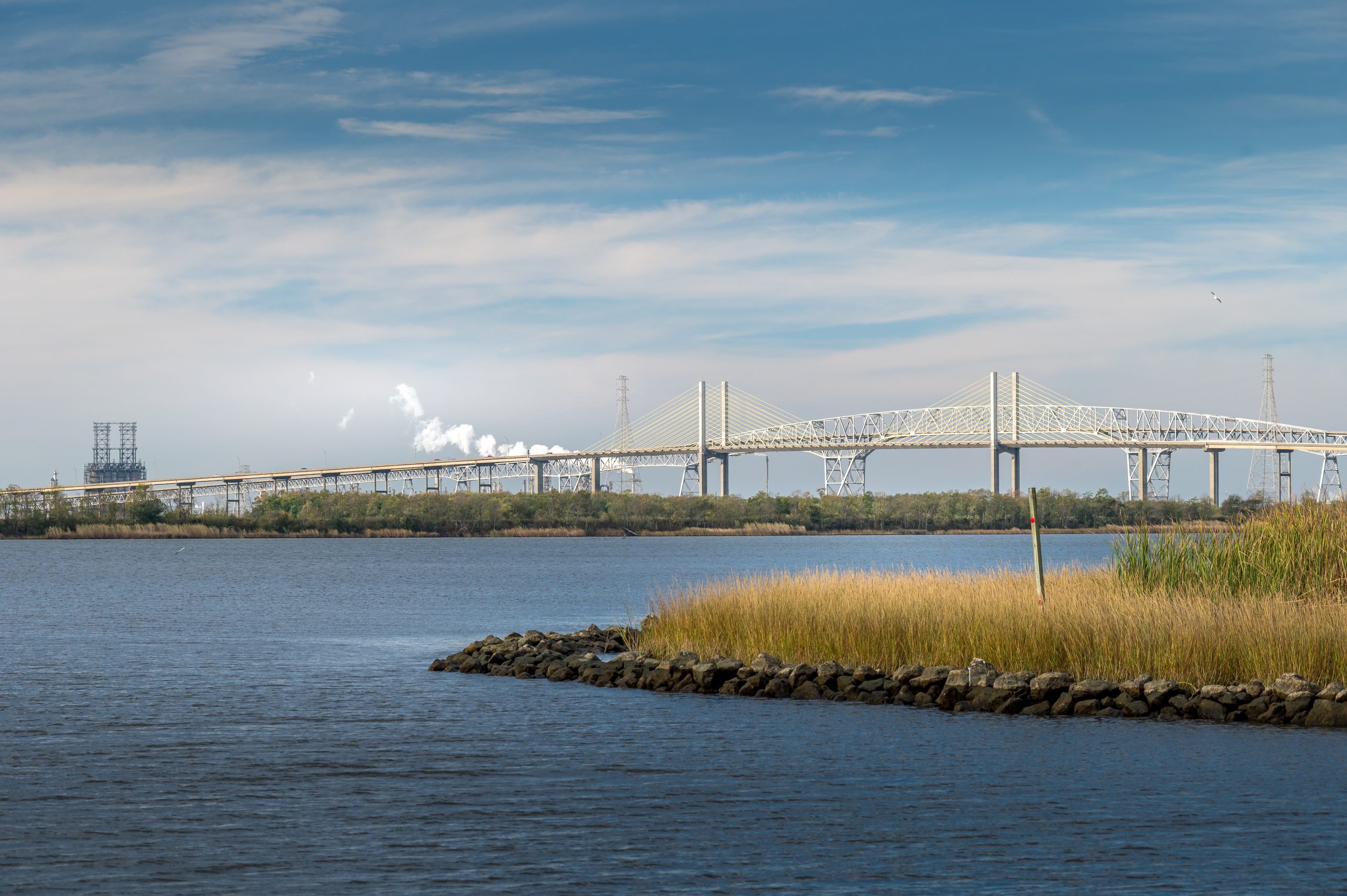

The Sabine Pass to Galveston Bay Project is led by the U.S. Army Corps of Engineers in partnership with the Texas General Land Office and the Gulf Coast Protection District. Its purpose is to reduce the destructive impacts of coastal storm surge along the upper Texas coast; an area repeatedly hit by hurricanes. The project centers on strengthening levees, floodwalls, and pump stations to protect communities and vital industries in Jefferson and Orange counties.
Hurricane Rita made landfall in 2005 as a Category 3 hurricane near the Texas-Louisiana border, causing widespread devastation across Southeast Texas. Unleashing sustained winds of 115 mph and storm surge up to 15 feet, this storm severely affected coastal communities like Port Arthur, Beaumont, and Orange County. More than 4,500 homes were destroyed and another 14,000 sustained major damage. Power outages lasted for weeks and was the catalyst to one of the largest emergency evacuations in U.S. history.
Four years later in 2008, Hurricane Ike hit the same area. For an area barely recovering from the last storm, a surge of 22 feet inundated the region and 37 people lost their lives.
In response, the Sabine Pass to Galveston Bay Project was authorized by Congress in 2018 and funded through supplemental disaster recovery appropriations. The project spans Orange, Jefferson, and Brazoria Counties. Each element of this project is currently in various stages of Pre-Construction Engineering and Design and construction, aiming to protect communities, critical infrastructure, and economic assets in one of the nation’s most hurricane-prone regions.


A multi-billion-dollar strategy led by the U.S. Army Corps of Engineers in partnership with the Texas General Land Office and Gulf Coast Protection District. This multi-faceted plan stretches from the Houston Ship Channel to South Padre Island. It includes building man-made storm surge barriers, restoring ecosystems, and strengthening coastal defenses with natural storm surge protection.
In 2008, Hurricane Ike caused over $30 billion in storm-related damages to the upper Texas coast, impacting thousands of Texas homes and businesses around Galveston Bay, scraping Bolivar Peninsula nearly bare, and creating a debris line 15 feet tall and 40 miles long in Chambers County. The magnitude of Hurricane Ike not only disrupted the economic engines of Texas, but the entire nation. Millions of jobs, one of the world’s largest refining and petrochemical complexes, and shipping ports responsible for a quarter of the U.S.’s global supply chain were all affected. Estimates of economic disruption due to Hurricane Ike exceeded $150 billion.
The term “Ike Dike” was first used shortly after Hurricane Ike when Dr. Bill Merrell of Texas A&M University at Galveston proposed the concept of a coastal barrier system to protect the Houston-Galveston region. Merrell coined the name as a direct reference to Hurricane Ike. The earliest public mentions of the term appeared in late 2008 and early 2009 during interviews and local news coverage of Merrell’s proposal.
The U.S. Army Corps of Engineers took the concepts first developed by Dr. Merrell and delivered the Coastal Texas Protection and Restoration Feasibility Study and Environmental Impact Statement (EIS), a six-year, $20 million comprehensive study that sought to identify feasible, cost-effective, and ecologically sound projects to reduce risks to public health and the economy, to restore critical ecosystems, and to advance coastal resiliency.
These efforts culminated in 2021 when the commanding general of the U.S. Army Corps of Engineers signed off on the project, representing the largest single investment recommendation to Congress in U.S. history. In 2022, as part of the Water Resources Development Act of 2022, Congress formally authorized the Coastal Texas Project to advance into design and construction, pending appropriation of funding.